Some love stories don’t fade with time — they literally outlast centuries.
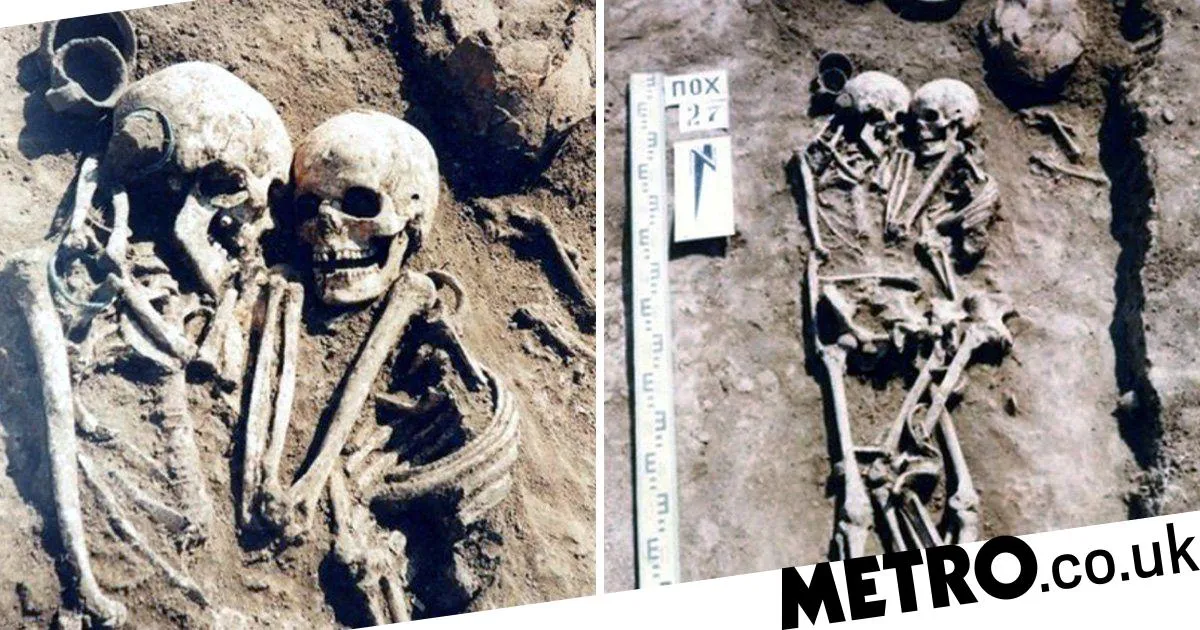
In 2018, archaeologists working near the village of Petrykiv in western Ukraine (Ternopil region) made a discovery that stopped the world in its tracks. Buried for roughly 3,000 years, they found the skeletons of a man and a woman from the Bronze Age Vysotskaya culture locked in a tender, intimate embrace.
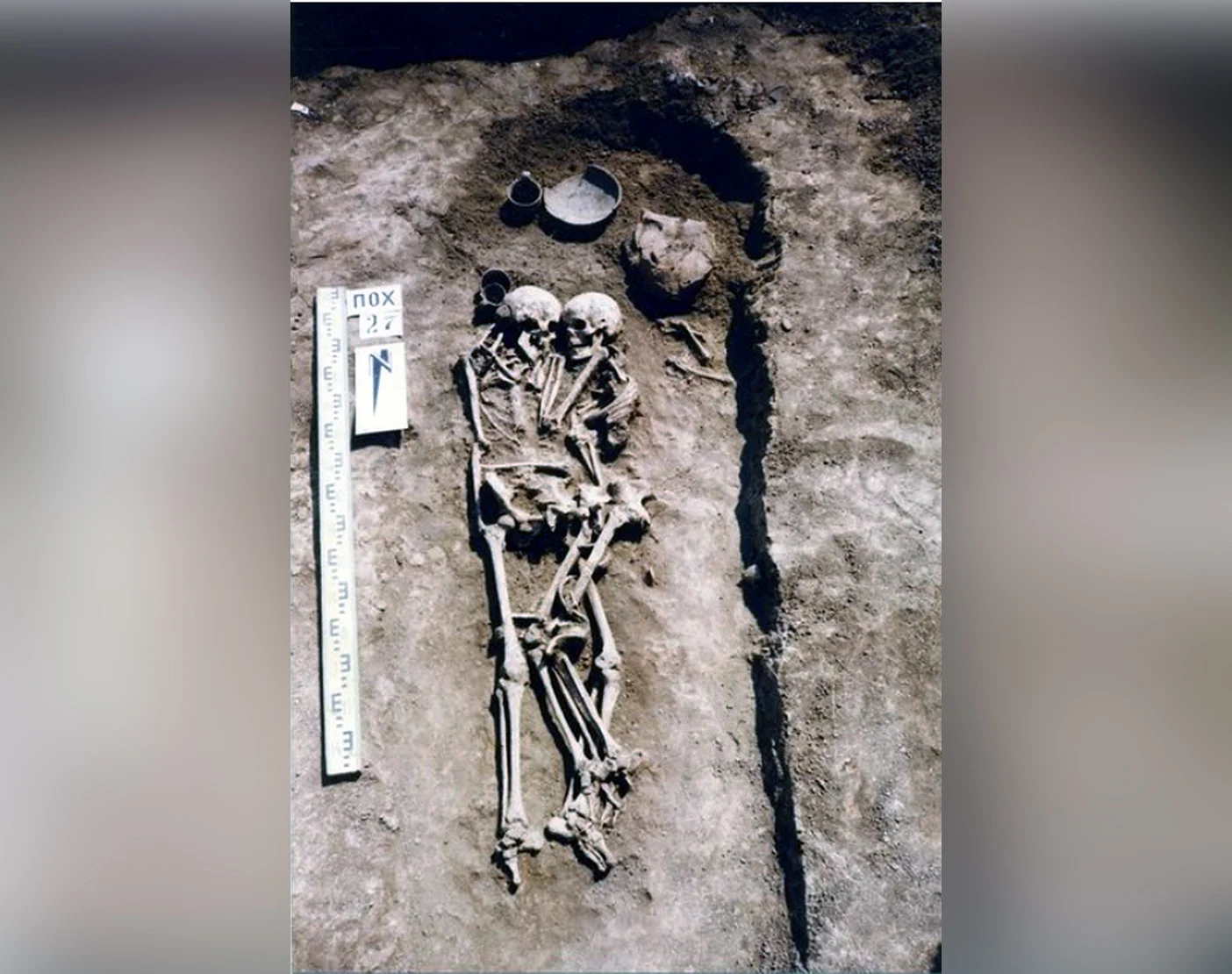
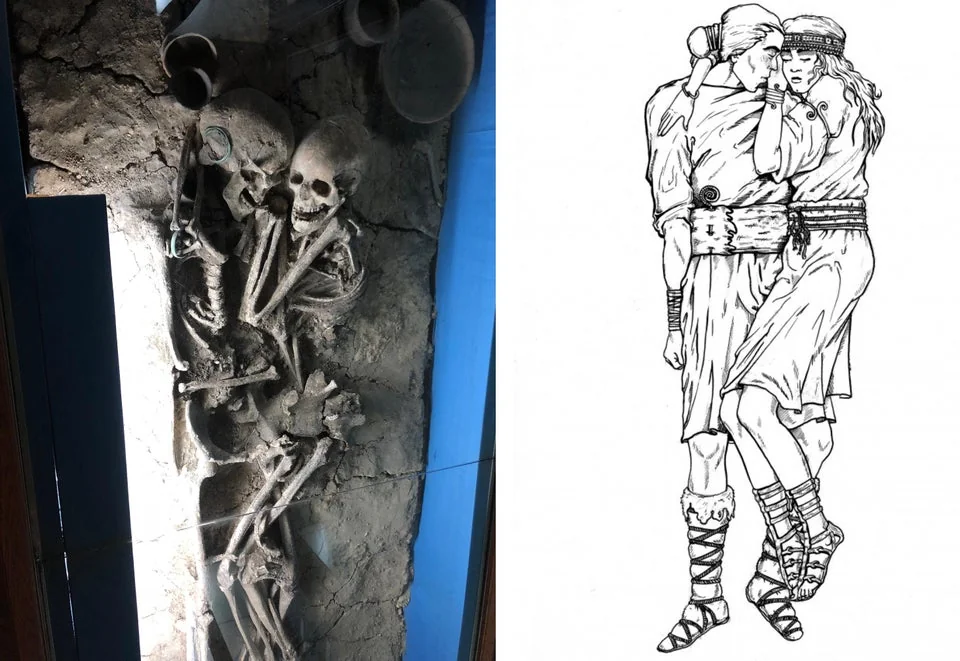
The man lies flat on his back, while the woman is curled against him — her arms wrapped tightly around his neck, her forehead touching his, and her legs draped naturally over his body. Their pose looks so lifelike that experts believe she entered the grave while still alive, choosing to lie down beside him in what may have been her final moments.
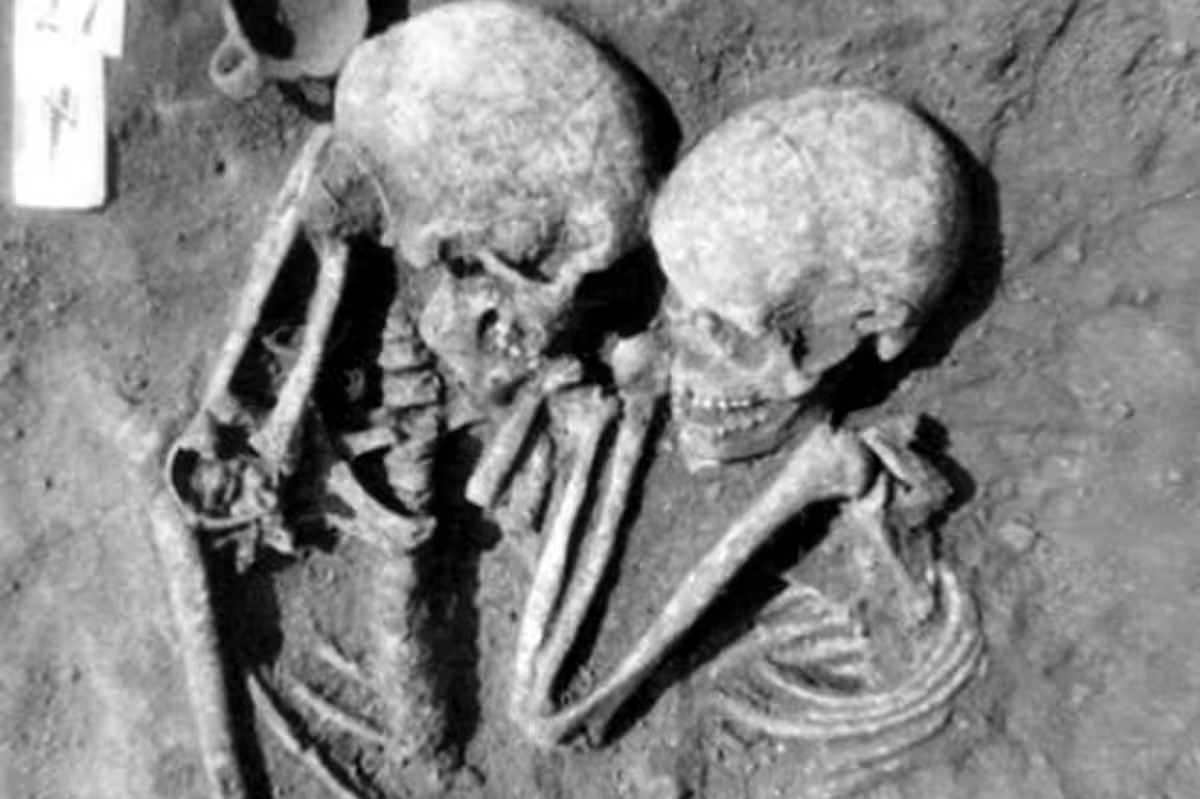
Both were adorned with bronze decorations, and pottery vessels — including bowls and jars — were placed near their heads as grave goods. This wasn’t a hasty burial. It looked like a deliberate, deeply personal farewell.
The Vysotskaya Culture and “Tender” Burials
The Vysotskaya culture flourished in what is now western Ukraine during the Late Bronze Age. They built fortified settlements and practiced burial rituals that sometimes reflected strong emotional bonds.
Professor Mykola Bandrivsky has studied many such “loving couple” burials from this culture. He described this particular grave as unique — the positioning was so natural that the woman could not have been arranged this way after death. The most likely scenario? She chose to join her partner in the afterlife voluntarily — possibly by taking poison — rather than live without him.
As Bandrivsky explained, she may not have wanted to adapt to life with another person. In a culture that believed in the eternal life of the soul, this act could have been seen as a way to remain together forever.
A Timeless Reminder of Human Emotion
What moves us most about this find isn’t just the archaeology — it’s the humanity.
Three millennia ago, in a world so different from ours, two people shared a bond powerful enough that one was willing to follow the other into death. Their embrace survived wars, empires, and the slow turning of the Earth itself.
Of course, we can never know their exact thoughts or feelings. Was it romantic love? Deep companionship? Cultural duty mixed with personal choice? Perhaps all of the above.
Still, this burial stands as powerful proof that the deepest human feelings — the desire to stay connected beyond life — are not modern inventions. They are as old as humanity itself.
Why This Story Still Captivates Us
In an age of fleeting connections, there’s something profoundly moving about two ancient skeletons refusing to be separated. Their story reminds us that love, in its truest form, can be fearless and all-consuming.
It also humanizes people from the distant past. They laughed, mourned, formed bonds, and made heartbreaking choices, just like us.
Next time you feel overwhelmed by modern life, remember the couple from Petrykiv. Their embrace lasted 3,000 years. Maybe the simplest, most powerful acts of love are the ones that echo the longest.
What do you think? Have you ever come across a historical story that made you reflect on love and loss? Share in the comments below — I’d love to hear your thoughts.
Images: Archaeological photos from the Petrykiv excavation (widely published in outlets like My Modern Met, Yahoo News, and Metro). Artistic reconstruction shown for visualization. Always credit sources when publishing.